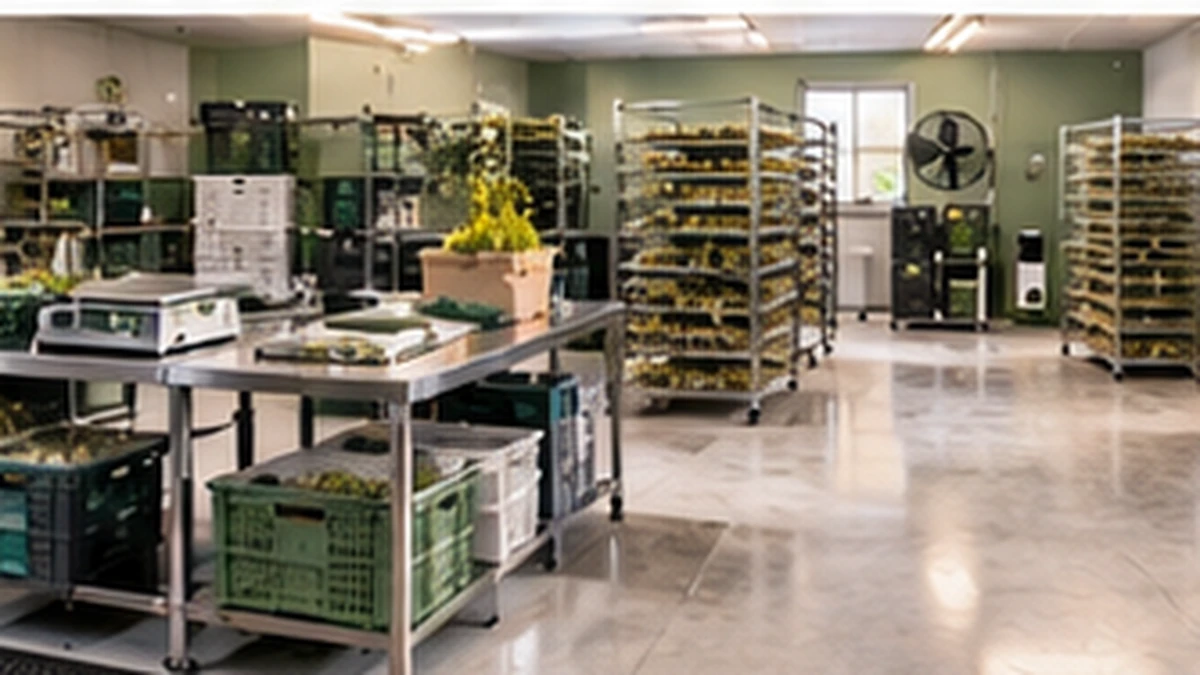
A post-harvest room works when product moves logically from receiving to cleaning, sorting, measurement, packing and storage without unnecessary cross-traffic or hard-to-clean bottlenecks.
This guide looks at best anti-fatigue mats for packing and sorting stations as part of a complete post-harvest workflow. The useful question is not whether a product has the longest feature list. It is whether it protects the crop, fits the room, can be cleaned, works for the people using it and supports the next handling step.
Compare current listings for dimensions, materials, load ratings and seller terms. Verify food-contact, crop and regulatory suitability independently.
Start with the crop and the next handling step
A mat should improve standing comfort without creating a trip edge or trapping water and debris in a wet-cleaned workspace.
Before shopping, write down what enters this step, what leaves it, and what can go wrong in between. Typical failure modes include bruising, contamination, poor airflow, excessive handling, worker fatigue, inaccurate measurement, blocked drainage or a container that cannot be cleaned effectively. The best purchase removes one of those failures without creating another one downstream.
Three realistic use cases
Weighing Stations
For weighing stations, put the most weight on washability and slip resistance. Those two factors usually tell you more than a long feature list because they connect the purchase to the material, worker and next handling step.
Sorting Tables
For sorting tables, put the most weight on slip resistance and edge profile. Those two factors usually tell you more than a long feature list because they connect the purchase to the material, worker and next handling step.
Long Trimming Shifts
For long trimming shifts, put the most weight on edge profile and drainage. Those two factors usually tell you more than a long feature list because they connect the purchase to the material, worker and next handling step.
Five buying criteria that actually change the decision
Washability
For washability, write down the real requirement before shopping. Measure the container, doorway, rack bay, worktable, crop load or existing accessory where appropriate. If a listing does not state the material, dimension, capacity or interface you need, treat that as unknown rather than compatible.
Slip Resistance
For slip resistance, write down the real requirement before shopping. Measure the container, doorway, rack bay, worktable, crop load or existing accessory where appropriate. If a listing does not state the material, dimension, capacity or interface you need, treat that as unknown rather than compatible.
Edge Profile
For edge profile, write down the real requirement before shopping. Measure the container, doorway, rack bay, worktable, crop load or existing accessory where appropriate. If a listing does not state the material, dimension, capacity or interface you need, treat that as unknown rather than compatible.
Drainage
For drainage, write down the real requirement before shopping. Measure the container, doorway, rack bay, worktable, crop load or existing accessory where appropriate. If a listing does not state the material, dimension, capacity or interface you need, treat that as unknown rather than compatible.
Station Footprint
For station footprint, write down the real requirement before shopping. Measure the container, doorway, rack bay, worktable, crop load or existing accessory where appropriate. If a listing does not state the material, dimension, capacity or interface you need, treat that as unknown rather than compatible.
Cleanability belongs on the spec sheet
FDA guidance for fresh produce emphasizes clean harvest containers, packing equipment, packing areas and storage areas. That makes cleanability a buying criterion, not merely a maintenance chore. Smooth accessible surfaces are easier to inspect than deep crevices, trapped seams and complicated hardware that cannot be reached without disassembly.
Think about how the item will be cleaned at the end of the busiest day of the season. Can it drain? Can it dry? Can workers see whether soil or plant material remains? Does the cleaning method damage labels, bearings, electronics or foam? A product that is difficult to clean tends to be cleaned less consistently.
Storage conditions are crop-specific
University of Minnesota Extension's current post-harvest guidance illustrates how widely storage targets differ. Many fresh crops are listed near 95% relative humidity, while crops such as onions and some winter squash are listed around 50% RH. Recommended temperatures likewise vary by commodity. That is why HarvestSupplies.co does not attach one universal temperature or humidity target to every storage product.
Use environmental instruments to verify the conditions required by the crop, not to chase an arbitrary number. Sensor placement matters too: a thermometer at a doorway or a hygrometer directly in front of a fan can report a condition the stored product never experiences.
Compare current listings for dimensions, materials, load ratings and seller terms. Verify food-contact, crop and regulatory suitability independently.
Handling damage is a hidden cost
Fresh produce continues to change after harvest, and bruising or mechanical injury can accelerate quality loss. Container geometry, drop height, overfilling, sharp edges and unnecessary transfers can matter as much as the product's advertised capacity. When comparing equipment, count how many times the crop has to be lifted, dumped, squeezed or repacked.
For containers and racks, test the loaded configuration rather than an empty sample. A tote that stacks beautifully when empty may bow when loaded. A cart that rolls easily in a catalog may become difficult to steer through a narrow doorway. A picking bag that feels light in the store can change worker posture after an hour of repeated filling.
Measurement should match the decision
More display digits do not automatically improve process control. A scale, thermometer or humidity logger should be accurate enough for the decision being made and should be checked or verified according to the operation's procedure. Resolution that exceeds the real repeatability of the process can create false precision.
Measurement is most useful when it triggers an action. Decide in advance what happens when weight, temperature or humidity moves outside the expected range. Logging data without a response plan creates records, not control.
Sanitation and agricultural water
When equipment involves washing or water that directly contacts covered produce, do not copy a generic internet recipe. FDA's current FSMA Produce Safety Rule guidance addresses harvest and post-harvest agricultural water, including management and monitoring requirements for covered operations. Sanitizer chemistry, concentration, contact time and verification must follow the product label and applicable requirements.
The practical equipment implication is simple: choose hardware that supports the written process. If a wash station needs controlled flow, easy drainage, test-strip access or clean tool storage, make those needs part of the purchase decision rather than adding them after installation.
Price the whole working setup
Marketplace prices move constantly, so this article does not freeze a price into the guide. Compare the complete working system: the main item, lids, liners, hooks, replacement blades, calibration weights, casters, trays, shelves, hoses, cleaning brushes or spare batteries required to use it properly.
Also price seasonal labor. A slightly more expensive item may be cheaper over a harvest season if it reduces lifting, cleans faster, nests efficiently, needs fewer replacement parts or prevents repeated transfers. Conversely, an industrial product can be wasted money if a simpler washable tool solves the same bottleneck at your scale.
Purchase worksheet
Worksheet: Washability
Record the current setup, the failure or bottleneck you are trying to fix, and the minimum acceptable requirement for washability. Then note whether the product changes cleaning, storage, airflow, lifting, labeling or worker movement. A purchase is not complete until those downstream effects are understood.
Worksheet: Slip Resistance
Record the current setup, the failure or bottleneck you are trying to fix, and the minimum acceptable requirement for slip resistance. Then note whether the product changes cleaning, storage, airflow, lifting, labeling or worker movement. A purchase is not complete until those downstream effects are understood.
Worksheet: Edge Profile
Record the current setup, the failure or bottleneck you are trying to fix, and the minimum acceptable requirement for edge profile. Then note whether the product changes cleaning, storage, airflow, lifting, labeling or worker movement. A purchase is not complete until those downstream effects are understood.
Worksheet: Drainage
Record the current setup, the failure or bottleneck you are trying to fix, and the minimum acceptable requirement for drainage. Then note whether the product changes cleaning, storage, airflow, lifting, labeling or worker movement. A purchase is not complete until those downstream effects are understood.
Worksheet: Station Footprint
Record the current setup, the failure or bottleneck you are trying to fix, and the minimum acceptable requirement for station footprint. Then note whether the product changes cleaning, storage, airflow, lifting, labeling or worker movement. A purchase is not complete until those downstream effects are understood.
Related HarvestSupplies guides
Frequently asked questions
What should I check first when buying anti-fatigue mats for packing and sorting stations?
Start with washability. If that does not match the crop, container, room or workflow, convenience features are secondary.
Should I buy the largest-capacity option?
Not automatically. Oversized containers, scales, racks and tools can increase lifting, floor-space and cleaning problems without improving throughput.
Are 'food safe' or 'food grade' marketplace claims enough?
Treat marketplace language as a starting point. Verify the intended use, material documentation and requirements that apply to your crop, operation and jurisdiction.
Can one temperature or humidity target work for every crop?
No. Storage conditions vary substantially by commodity. Use crop-specific extension, buyer or regulatory guidance.
How should I evaluate used post-harvest equipment?
Inspect cleanability, cracks, corrosion, worn fasteners, damaged surfaces, missing guards or parts, and whether replacement components are still available.
Why does this guide avoid naming one permanent winner?
Inventory and models change, and the correct product depends on crop, volume, sanitation plan, room layout and workflow. The article focuses on durable buying criteria instead.
Compare current listings for dimensions, materials, load ratings and seller terms. Verify food-contact, crop and regulatory suitability independently.
Technical references
These references support the handling, sanitation and storage principles used in this guide. Crop-specific and jurisdiction-specific requirements still control.